
Published March 30, 2025 in if.team blog

Vladyslav Chesnokov
Copywriter, if.team

Oleh Frolov
CEO, if.team

Remote work gives companies freedom but complicates process management. Task chaos increases, deadlines slip, and costs spiral out of control. A startup project management tool solves these problems by automating planning, managing resources, and controlling budgets.
In this article, we’ll explain how if.team helps optimize processes, reduce costs, and boost team productivity.
Project management in a startup is a constant balance between speed and control. Without an effective startup project management tool, processes quickly become chaotic: deadlines slip, communication breaks down, and the team loses focus.
Scattered Communication
Startups often lack a unified platform for information exchange. Instead, communication is spread across various messengers, emails, and spreadsheets. This creates confusion—important messages can get lost, and tasks may go unnoticed. As a result, coordination and workflow progress become more challenging, with each team member potentially having their own version of what needs to be done and how.
Missed Deadlines and Shifting Priorities
Rapid changes and continuous product iterations are a reality for startups. However, without a clear system for prioritization and deadline management, tasks can easily be delayed or completely forgotten. The lack of a well-defined project roadmap may result in critical stages being postponed due to uncertainty or misaligned priorities.
Lack of Team Transparency
Without a centralized platform for task tracking and reporting, understanding the real state of work becomes difficult. Each team member may work in isolation, making planning and performance evaluation challenging. A lack of transparency can also lead to overlapping responsibilities and even disputes over who is responsible for what.
Financial Risks Due to Poor Expense Control
Financial management in startups is often far from ideal. Without a proper budgeting tool, it becomes difficult to accurately forecast expenses or detect overspending in time. This can lead to money being wasted on inefficient processes while critical stages lack resources. Such financial challenges can slow down growth and even threaten the startup’s survival.
Overload from Routine Tasks
Small teams often juggle numerous small organizational tasks, from managing calendars to manually updating task statuses. This consumes valuable time and energy that could be better spent on product development or strategy. Routine tasks can pile up, creating a constant sense of rush and incompleteness, which delays processes and reduces overall efficiency.
Scaling Process Challenges
In the early stages, a startup can manage workflows manually. However, as the team grows and the number of tasks increases, there’s a need for a more structured approach. Without the right project management tool, processes can spiral out of control, leading to decreased efficiency and loss of project cohesion.
Choose the right startup project management tool—and say goodbye to missed deadlines, communication confusion, and task chaos.
In startups, there are constant situations where it feels like everything is going off track. The reason for this lies in the chaos that arises from the lack of a unified management system. Without clear organization of workflows, deadlines are missed, tasks remain unfinished, and communication becomes ineffective. In such conditions, the team spends time solving problems that could have been avoided with the right tool.
However, startups often work with limited resources, so they must choose tools that allow them to organize work quickly and effectively. Compared to large companies, where there are separate departments for project management, startups cannot afford such luxury. Here, each employee performs multiple roles at once, and the management system must be simple and intuitive to save time and minimize costs.
The problems that arise without an effective tool are not just organizational chaos but also financial losses. If the team cannot efficiently plan and control expenses, it may lead to budget overruns, which in turn reduces the startup’s competitiveness. Additionally, without a proper system, it’s hard to evaluate team productivity, making decisions about resource allocation and scaling the business more difficult.
For a startup, it’s crucial to have a tool that gathers all information in one place, ensures transparency and clarity in task execution, and helps the team stay focused on achieving goals. Such a tool allows for the automation of routine processes, reducing the team’s workload and giving them the freedom to focus on product development and improving results.
When processes aren’t centralized and the team works with various tools that aren’t integrated, typical challenges arise for startups. Without a unified space for task management and communication, tasks easily get lost among numerous messages and spreadsheets. As a result, deadlines are missed, priorities shift constantly, and important issues are left unattended. This wastes time and resources, making work less efficient.
Communication and workflow organization problems lead to another challenge—low productivity. When team members can’t quickly exchange necessary information, processes slow down, and errors increase. As a result, the startup struggles to respond quickly to market changes or shifts in the business environment, which is crucial for small businesses.
Common problems faced by startups without a unified management tool include:
These issues can be avoided by using a project management tool that gathers all information in one place, makes processes transparent and understandable, and helps the team stay focused on important tasks. Such a system allows automation of routine tasks, reducing team workload and enabling them to focus on growing the startup.
A key element for the effective functioning of a startup is choosing the right project management tool. Without an adequate tool, processes quickly become chaotic. This not only makes it difficult to achieve goals but also threatens the very possibility of executing plans. The right tool helps the team stay focused, complete tasks clearly, and meet deadlines.
One of the main problems solved by an effective system is task organization and prioritization. If tasks are scattered across different communication channels, spreadsheets, and messengers, they are hard to track and coordinate. Project management platforms provide a centralized database for all tasks, allowing you to clearly see who is working on what, which tasks have been completed, and which ones remain unfinished. This is especially crucial for startups, which often operate with limited resources and can’t afford to misplace or forget important tasks.
A project management tool also helps prioritize tasks correctly. It ensures flexibility, enabling quick responses to market changes or new client needs, while ensuring that critical tasks are completed on time. By using the system, you can easily identify what’s most urgent and what can wait. This reduces the chances of important tasks being postponed or forgotten amid less critical ones.
Priorities may change, but when they are maintained in a single workspace, it’s important to have a tool that allows you to track, analyze, and respond to these changes quickly. Such a system ensures control over the situation, even in the dynamic environment of a startup.
Startups often face situations where it feels like everything is going wrong. The reason for this lies in the chaos that results from the lack of a unified management system. Without clear organization of work processes, deadlines are missed, tasks remain incomplete, and communication becomes ineffective. In such conditions, the team spends time solving problems that could be prevented with the right tool.
However, startups often operate with limited resources, so they must choose tools that allow them to organize work quickly and efficiently. Unlike large companies, where there are separate departments for project management, startups cannot afford such luxuries. Here, every employee performs multiple functions simultaneously, and the management system must be simple and intuitive to save time and minimize costs.
The problems that arise without an effective tool are not only organizational chaos but also financial losses. If the team cannot plan and control costs effectively, it may lead to budget overruns, which in turn decreases the startup’s competitiveness. Additionally, without the right system, it’s hard to assess the team’s productivity, which complicates decision-making regarding resource allocation and business scaling.
For a startup, it’s crucial to have a tool that allows all information to be gathered in one place, ensures transparency and clarity in task execution, and helps the team stay focused on achieving goals. Such a tool automates routine processes, reducing the team’s workload and giving them the opportunity to focus on product development and improving results.
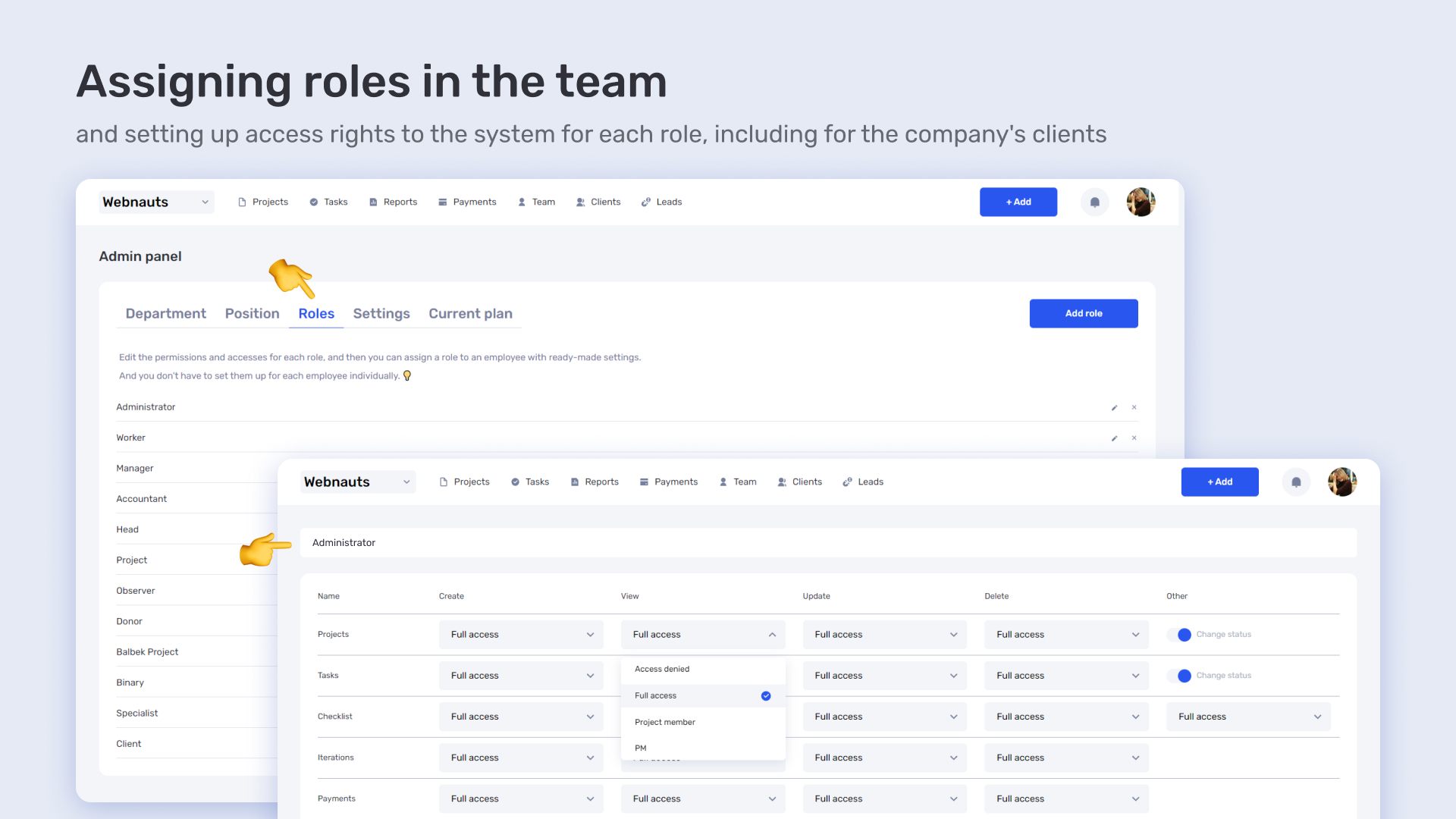
Team building and role assignment are the first steps toward organized work. If employees’ roles and responsibilities are not clearly defined, it can lead to confusion, duplicate work, or missed tasks. Therefore, it’s important to set clear role distribution.
With the help of if.team, you can create teams and assign specific roles to each employee, whether it’s a designer, copywriter, project manager, or another specialist. The system not only allows you to define roles but also set access levels to various functions in the ERP system, significantly simplifying the workflow. For example, if an employee holds a specific position, they can be automatically granted access to the relevant information needed to perform their duties.
Thanks to these settings, each employee knows their tasks and responsibilities precisely, which promotes better teamwork and reduces errors due to misunderstandings.
Without up-to-date information about employees, such as contact details, employment type, or birthdate, personnel management becomes significantly more difficult. If a manager needs to contact an employee they haven’t worked with before, it may take a lot of time and require additional requests to other colleagues.
if.team allows you to store detailed information about each employee, enabling you to quickly find the necessary data and contact colleagues. All information can be entered centrally, minimizing communication time and allowing managers to act quickly when needed. Access to this information can be configured based on roles within the company.
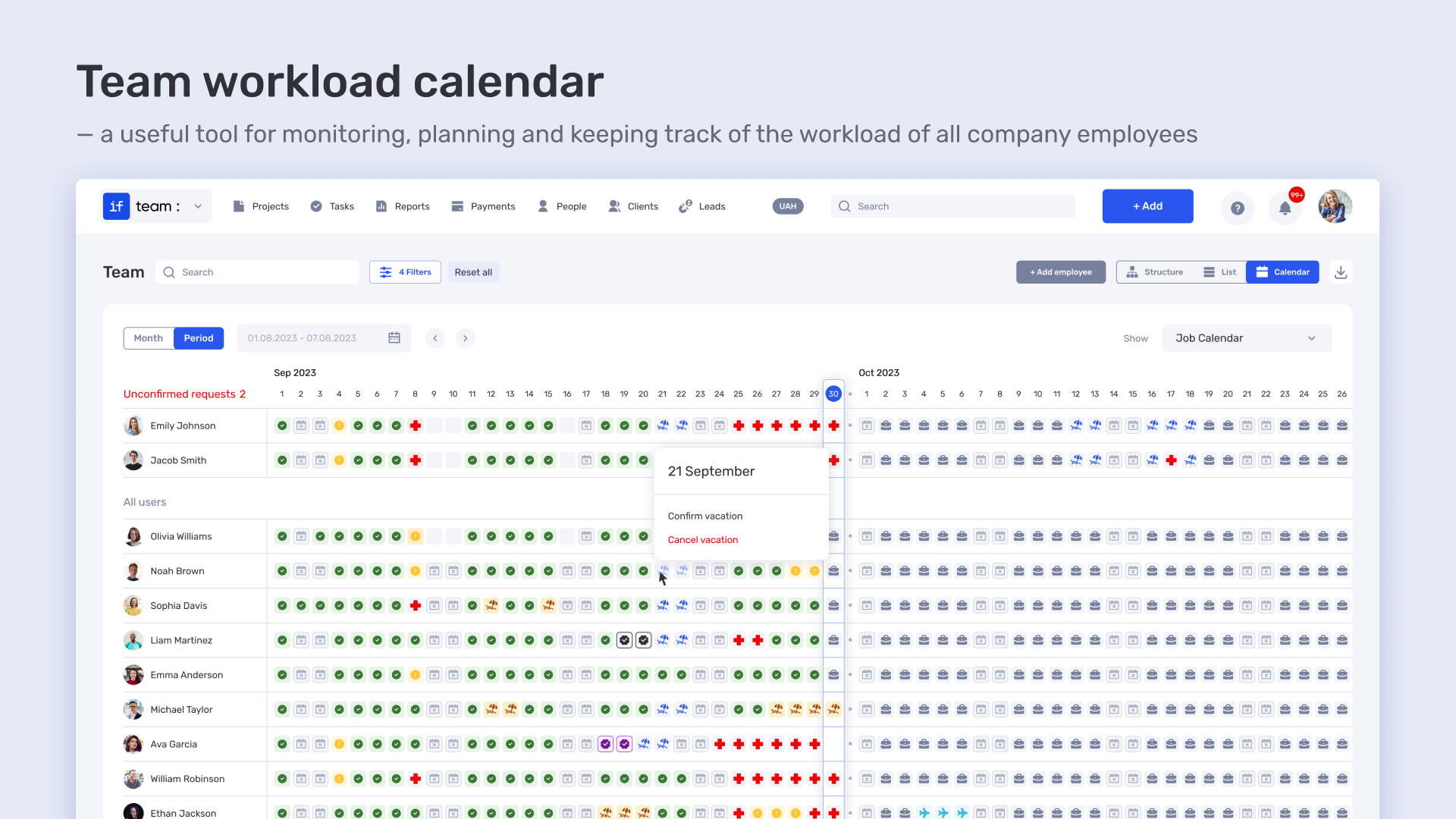
Access to employee work history helps analyze their productivity and allocate workloads effectively. Many companies face the problem of not being able to quickly understand who is doing what or how much time an employee has spent on completing a task.
if.team allows managers to view the work history of employees, which helps assess how much time each employee spends on tasks and identify potential issues. The calendar feature enables viewing employees’ schedules, as well as requests for vacations or sick leaves. This simplifies the decision-making process, as everything is displayed in a single system, minimizing human error and improving planning accuracy.
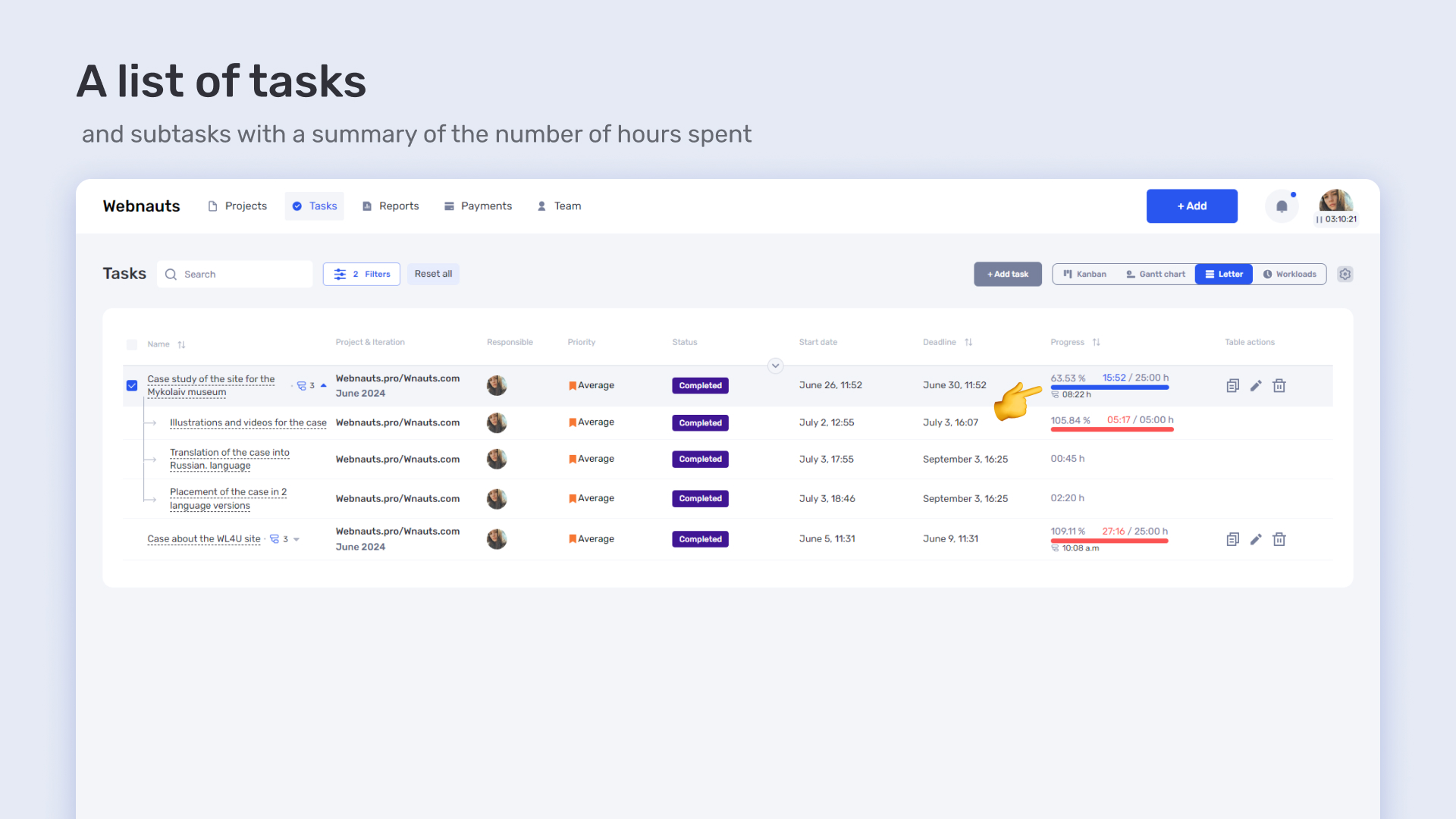
Task and project management is crucial for the effective operation of a company. Clear process organization helps avoid mistakes and delays while ensuring smooth teamwork. if.team tools help optimize these processes by offering convenient features for creating, delegating, and tracking tasks. Let’s explore how the system helps streamline work processes.
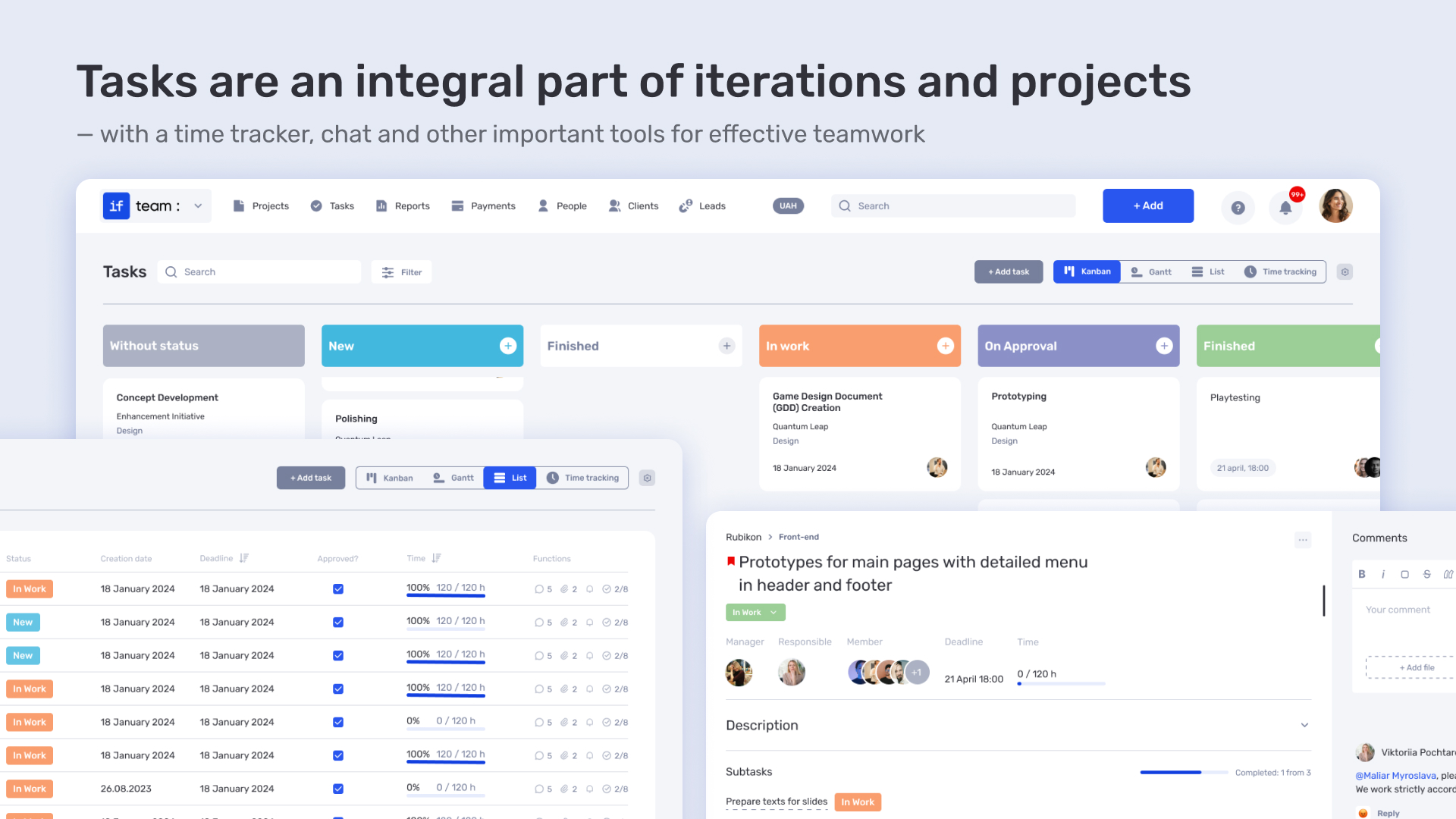
A crucial stage in project management is the clear definition of tasks. In if.team, you can create tasks, describe their requirements in detail, and delegate responsibility. You can specify the task’s name, status, set deadlines, and assign individuals responsible for execution. Each task can include additional information, subtasks, and priorities for better organization.
If a project has multiple stages or complex tasks, the system allows you to link subtasks to the main task for better process tracking. This enables effective distribution of work among team members and ensures no important details are overlooked.
Time management is key to the effective completion of tasks. In if.team, you can set specific deadlines and priorities. If a task is of high importance, you can mark it as a priority, helping to focus on critical tasks. Clearly defining the completion time (e.g., by 12:00) helps avoid confusion and ensures timely execution.
A key feature is the ability to adjust deadlines and priorities in real time, allowing you to quickly adapt to changing circumstances. With this, you can be confident that important tasks are completed on time.
Dividing a project into stages through iterations simplifies managing large projects. In if.team, you can create iterations for each project, linking relevant tasks to them. This helps clearly distribute work stages and track their completion, making the project more organized.
With this approach, each stage can be monitored and its progress evaluated, reducing the risk of delays and promoting the timely completion of the project. Iterations allow for a flexible approach to task execution, enabling adjustments based on changing circumstances.
Try if.team for free and see how the right service accelerates the development of your project.
Financial management is a key element of success for any business. if.team is a powerful project management tool for startups that offers features for efficient cost planning and financial control, allowing you to reduce expenses and increase project profitability.
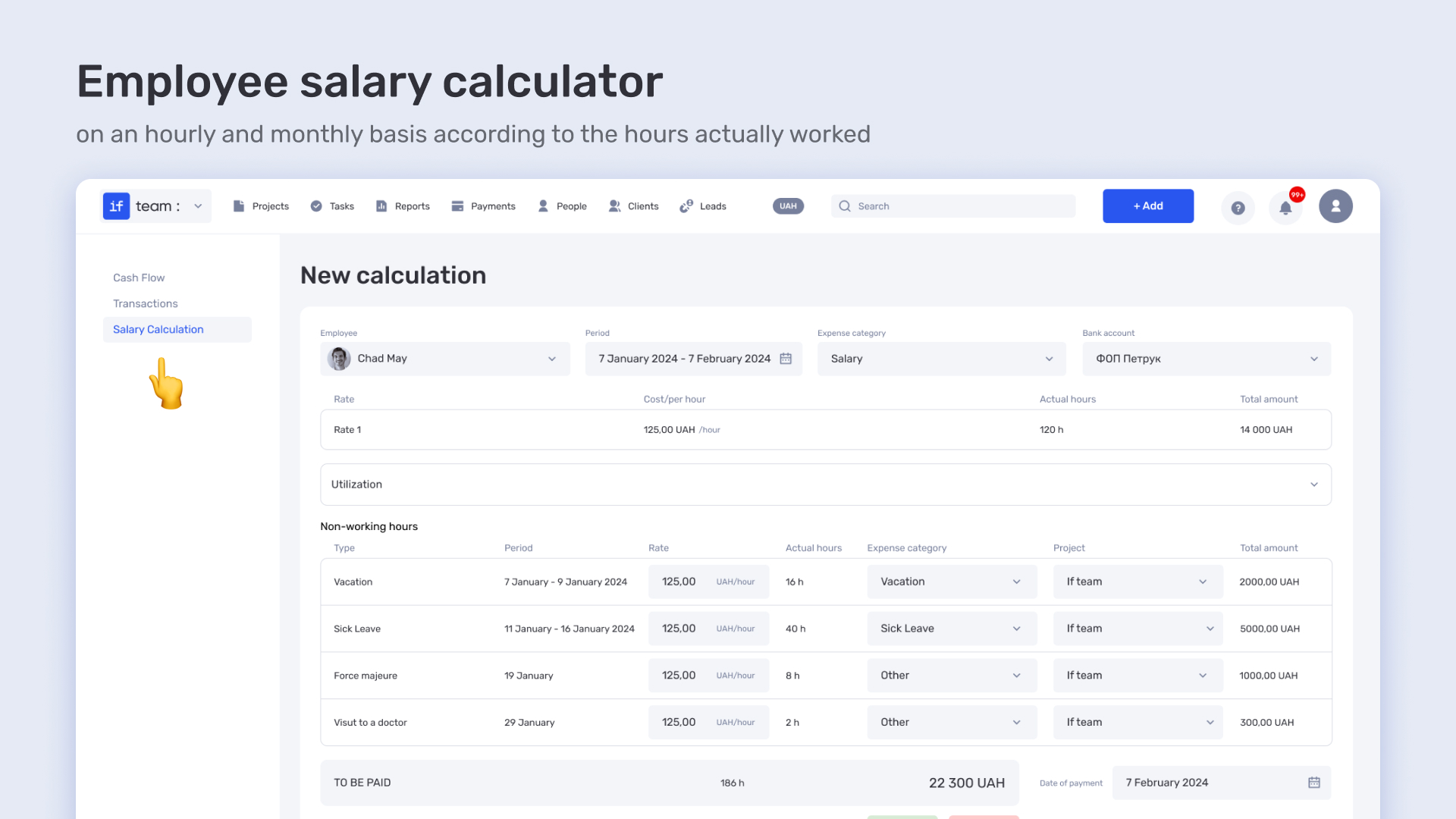
With if.team, you can set up financial models for different projects. This allows you to define the conditions that suit specific teams and tasks. Users can set working hours, vacation and sick leave days for each employee, as well as adjust the work schedule based on the specifics of the project.
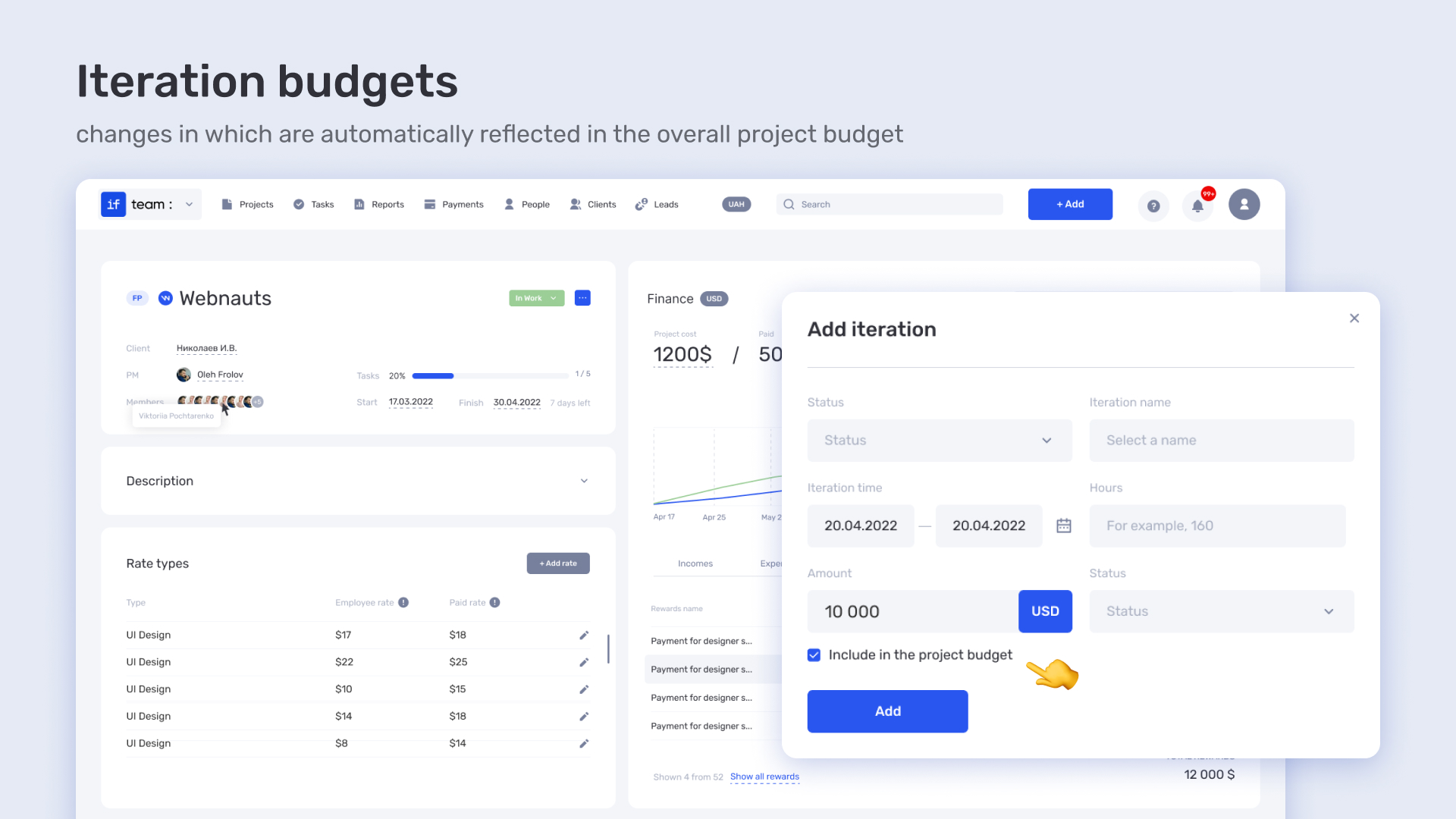
The if.team system allows you to choose between hourly wages and fixed rates for employees, enabling you to adapt compensation to the specifics of the project. This makes cost management more transparent. Managers can set different rates for various roles, such as designers or copywriters.
For startups, where budgets are often limited, this is especially important. With this startup project management tool, you can select optimal payment models, helping reduce costs without compromising the quality of work.
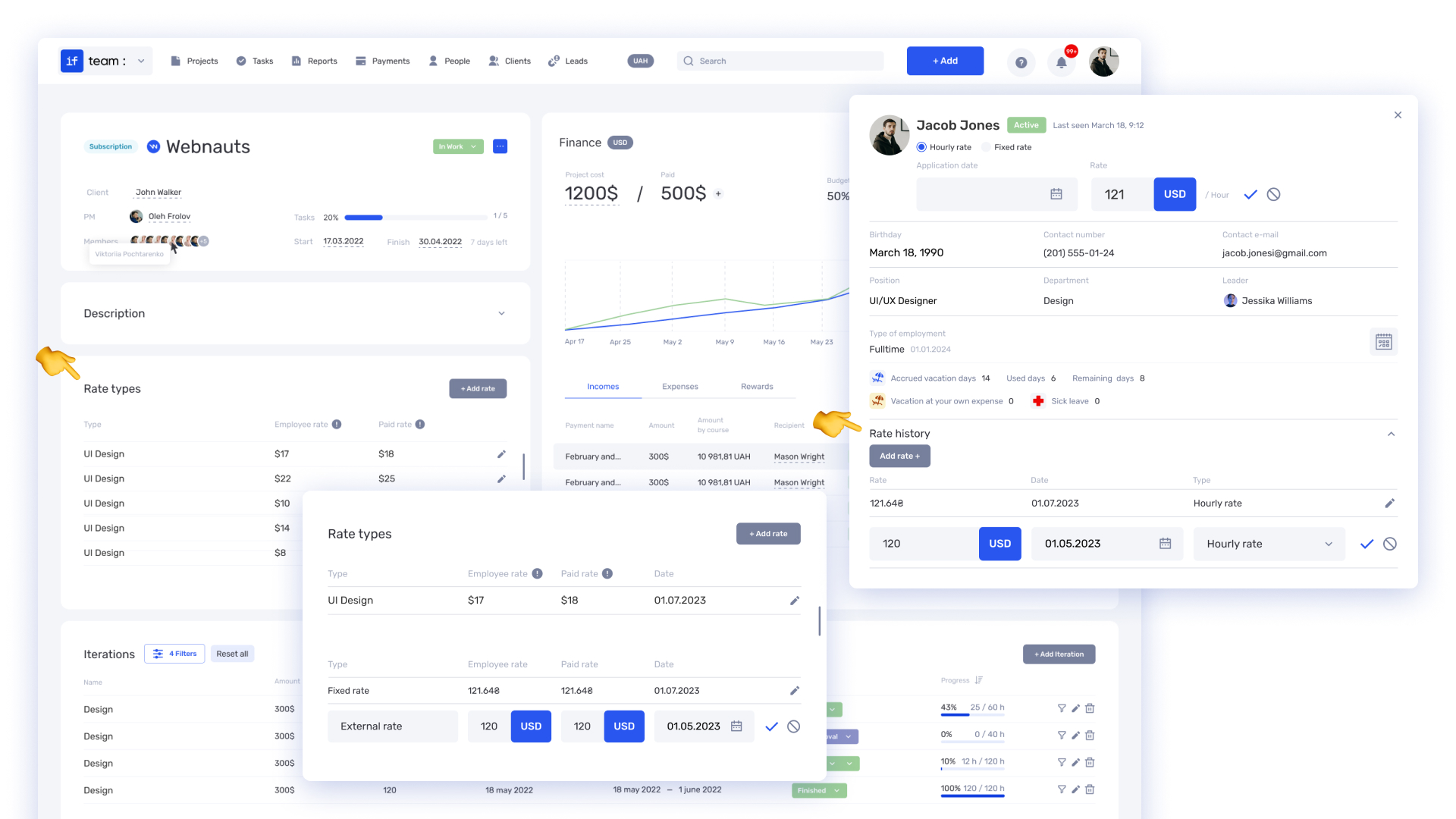
if.team allows you to track expenses at every stage of the project. All labor costs are automatically recorded, and you can view data for each employee or project as a whole. This enables you to quickly adjust the budget and identify areas where overspending is occurring.
For startups operating with fluctuating funding, this startup project management tool allows for continuous expense monitoring and provides flexibility in financial management.
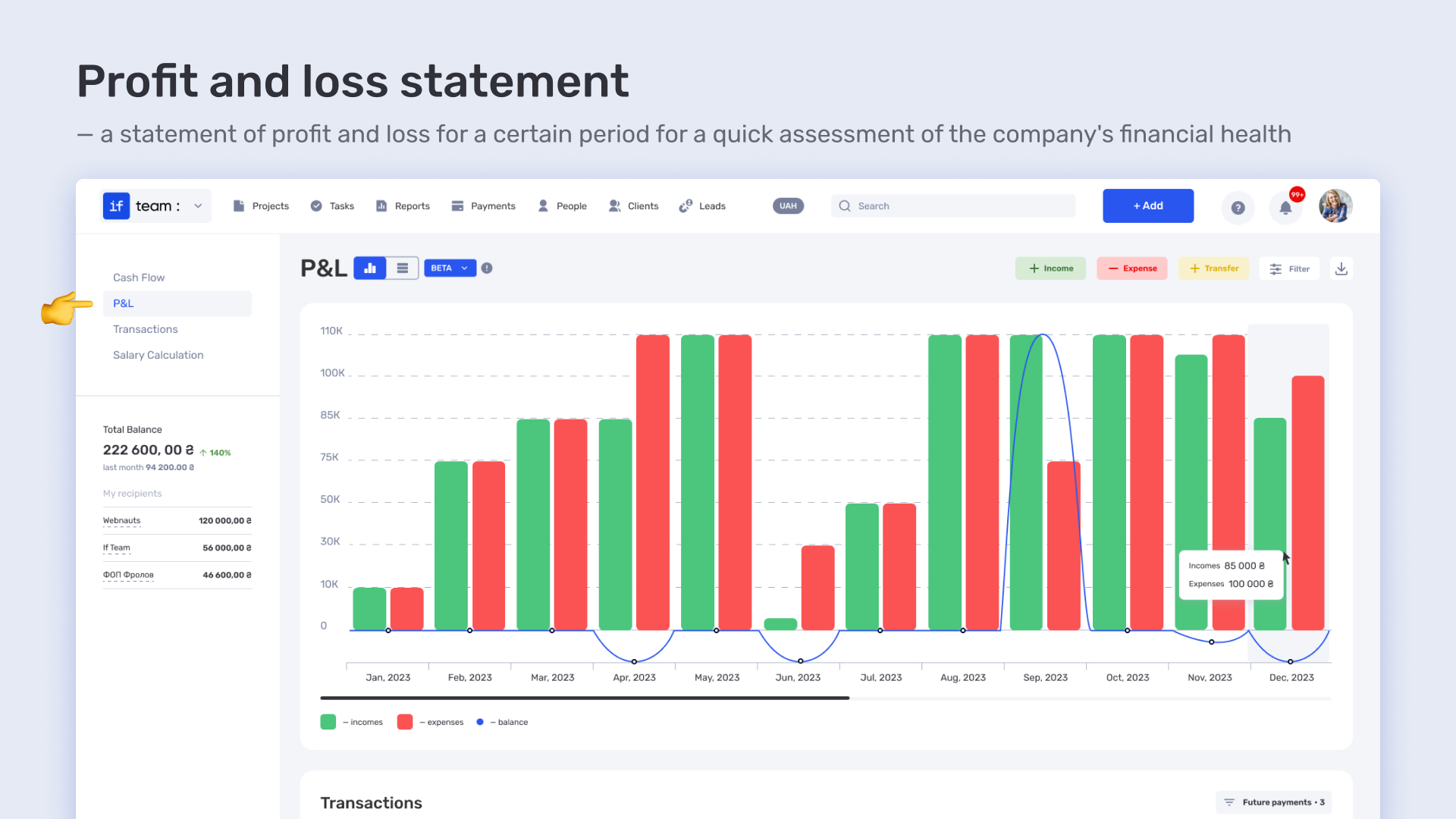
Managing business processes is a crucial component of success for any company, especially for startups that are constantly faced with the need to optimize resources, budget, and time. The if.team platform is a comprehensive solution that helps startups address these challenges by automating project management, finances, and team collaboration.
SolidWay is an IT outsourcing company specializing in software development for small and medium-sized businesses in the EU. Founded in 2023, the company recognized the importance of process optimization to achieve high-quality products from the outset. With a team of 2–10 people, they actively work with clients, offering a range of IT solutions that include design development, interface logic, testing, and deployment of finished software.
Learn more about how if.team can help your business in our case.
Obriy Design Büro is a creative design studio specializing in visual concept development and design projects for clients in various industries. The studio strives for high-quality work and continuously improves its internal processes to meet the high standards of the design market.
Learn more about how if.team can help your business here.
Business process management is a key factor in the success of any startup. Effective planning and organization of work determine whether a company can grow and thrive in a highly competitive environment with limited resources. Choosing the right tool for managing projects can be a critical factor that helps optimize workflows and save time.
if.team is the ideal solution for startups looking to streamline project management with simplicity and efficiency. This tool not only automates most routine tasks but also provides access to all the necessary features for easy management of teams, finances, and time.
One of the main advantages of if.team is its ability to integrate various aspects of business into a single comprehensive solution. The platform provides flexibility and allows adapting the interface to the specific needs of the company. As your startup grows, if.team easily scales and adds new features that meet your requirements.
Another important aspect is the integration of financial management and HR tools. These features allow startups to save time by not using multiple programs for expense tracking, salary calculations, or budget planning. if.team ensures transparency in financial processes and allows easy monitoring of expenses and revenue, which is essential for the effective development of the business.
With its intuitive interface, even without prior experience with similar systems, the team can quickly learn the platform. This helps avoid significant time spent on training and adaptation, which is especially important for startups where every day counts.
It’s also worth noting the integration with other popular tools already used in startups, such as Google Calendar, Slack, and various accounting and finance systems. This allows seamless integration of if.team with other parts of the business without causing additional difficulties.
All these advantages make if.team the perfect choice for startups looking for an effective solution to manage projects that will grow with them. It’s a powerful tool that enables startups to focus on innovation and development, rather than on routine operations that consume time and resources.






Optimize Your Startup Management
Simpler, faster, more efficient — everything you need for your business success in one tool.