How if.team helped a game development studio to systematise its routine for creativity's sake
Hanna Pichkur
Copywriter, if.team
Oleh Frolov
CEO, if.team
Some might say that forcing creativity into a system will stifle the development of true innovation. However, Play Fusion Labs’ real-life experience of managing unrealistically exciting projects proves the opposite: even the most creative team in the world needs to be systematic. After all, nothing kills creativity like disorganisation and disorder in work processes.
Even if each of your projects is a game, there is always a balance between time, budget and scope. These are the so-called sides of the “iron triangle” that determine the quality of the project, or rather the successful release of the game.
The if.team system helps developers maintain a balance of resources and be resourceful. Read how the Play Fusion Labs team said ‘Game over’ to organisational chaos and freed up more time and creative energy to design game worlds in our case study.
About Play Fusion Labs
Niche: game development: from concept to release
Time of using if.team: 2 months
The Ukrainian team at Play Fusion Labs has gone through an exciting journey from gamers to professional players in the field of game development. Although the developers have always loved games, quests like ‘What stage is the project at?’ and ‘Where is the money spent?’ did not appeal to them at all. The team, which has no limits to its creativity, also wanted to keep projects on time and on budget. Attempts to streamline business processes using several popular software programs didn’t help until the team came across the if.team ERP system.
if.team service instead of Jira, Trello and Miro
In this section, we’ll talk about the challenges Play Fusion Labs faced in managing projects using different platforms. We’ll also take a closer look at how the implementation of if.team helped them overcome these challenges and optimize their workflows.
Project management before if.team
Previously, Play Fusion Labs managed workflows in Jira and Trello, but neither fully met the team’s needs. Neither Jira’s heavy interface nor Trello’s limited functionality made it easy to interact with the system and communicate effectively with the team. Creating new tasks and delegating ongoing tasks to all participants with repeated explanations of the work front led to inefficient time consumption, which became a key problem for the team.
Moreover, it was so important for the studio to be able to track the progress of projects over time that they specifically added another tool to their arsenal: Miro. For the simple reason that, unlike Jira and Trello, it had a Gantt chart. Of course, this made things more complicated and confusing for the team.
The variety of systems serving a small team created another challenge: the need to keep track of a large amount of dispersed project information at all times.
The team's work after the implementation of if.team
Switching between the top three popular services continued until a new all-in-one tool, specially designed for project teams like Play Fusion Labs, appeared on the horizon of the Ukrainian ERP market.
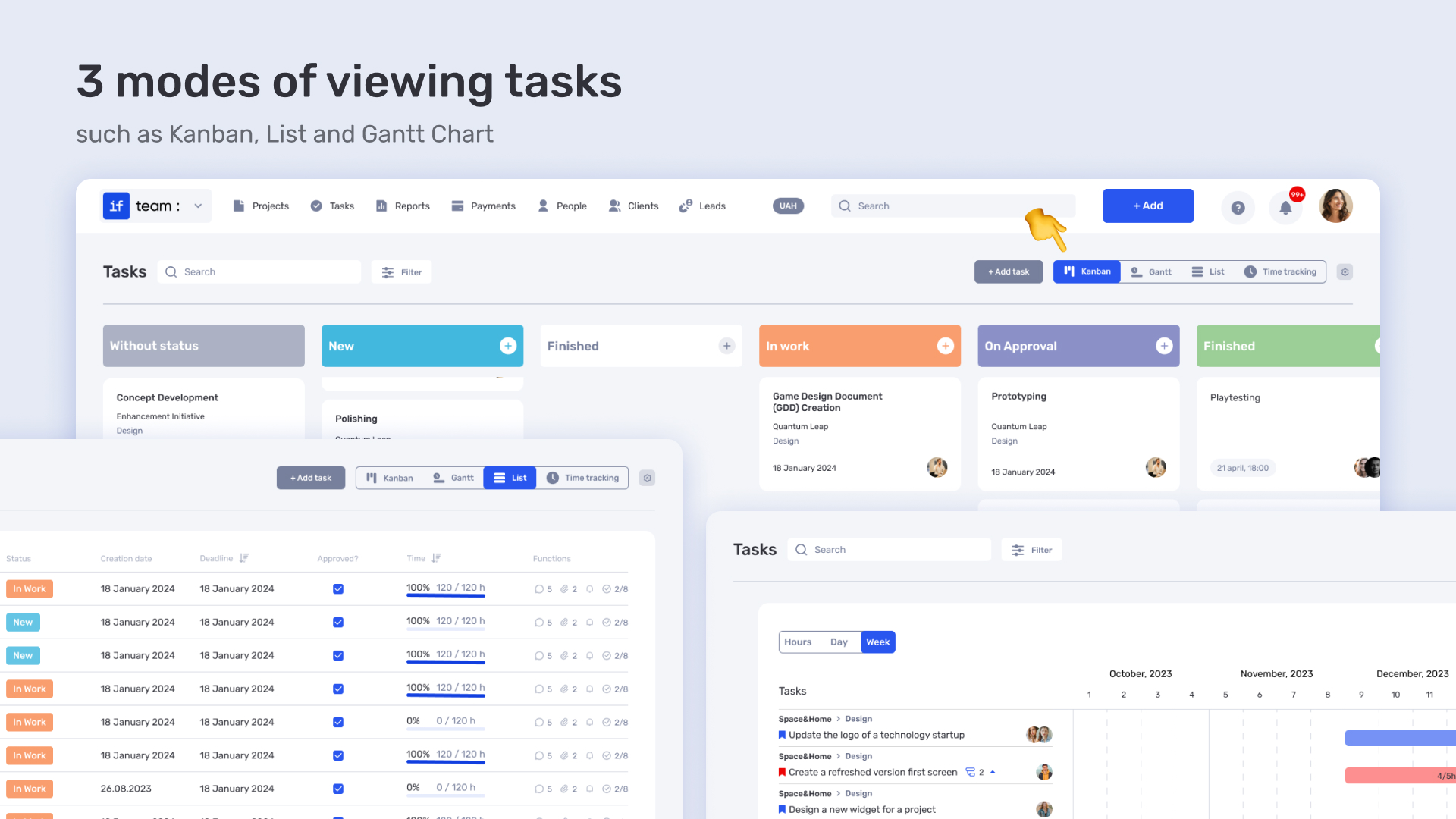
Unlike Jira and Trello, the if.team service has a simple and intuitive interface that facilitates quick adaptation and team engagement. The system offers 3 modes of viewing tasks, including the Gantt chart, an essential tool for game developers.
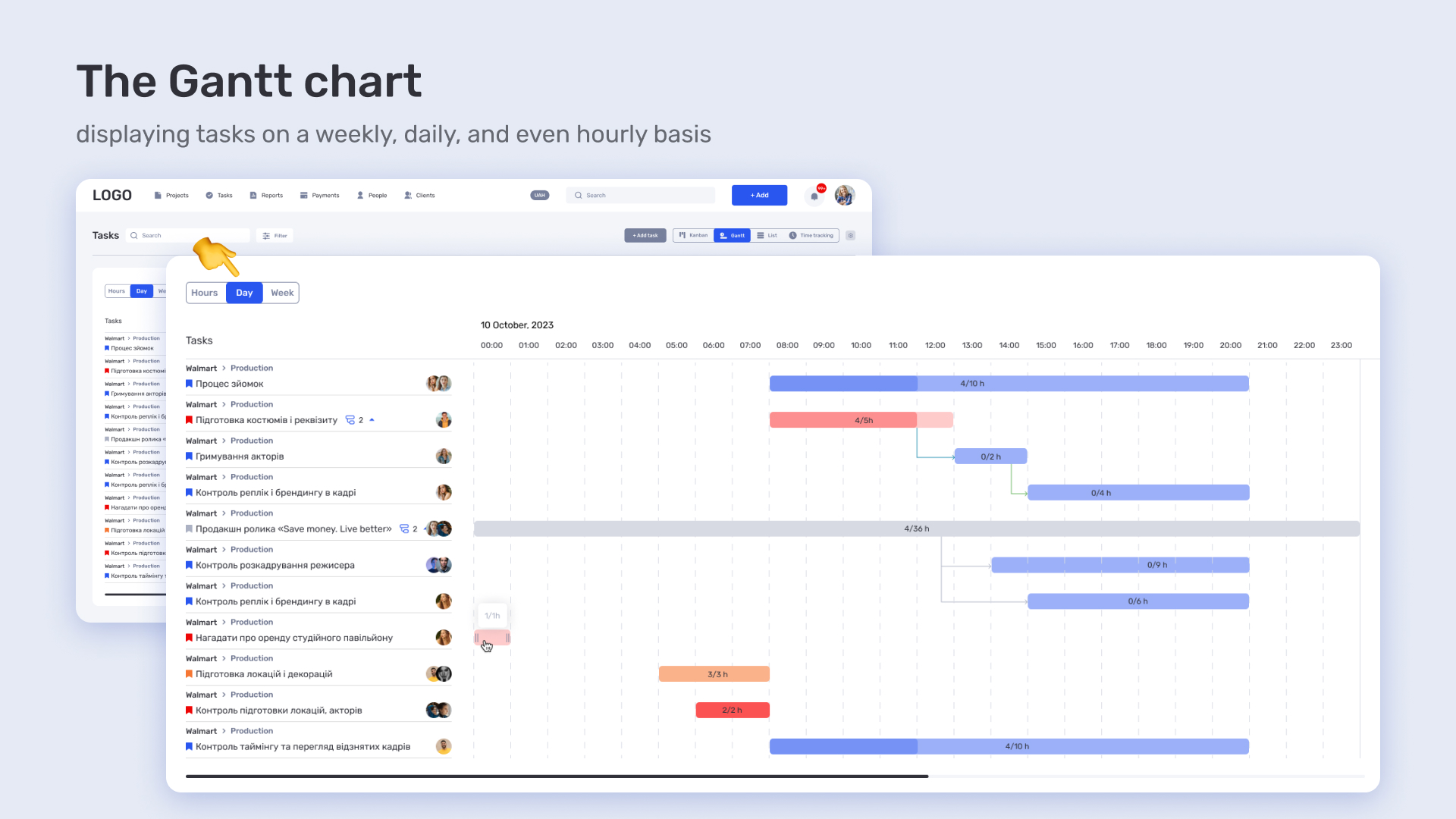
The Gantt chart in the if.team ERP system is very flexible and can be used at the project level with filtering tasks by name, status, priority, deadline, and performers. By the way, Play Fusion Labs actively cooperates with the service’s technical team and has already proposed to extend the Gantt chart to all projects, which is likely to happen soon.
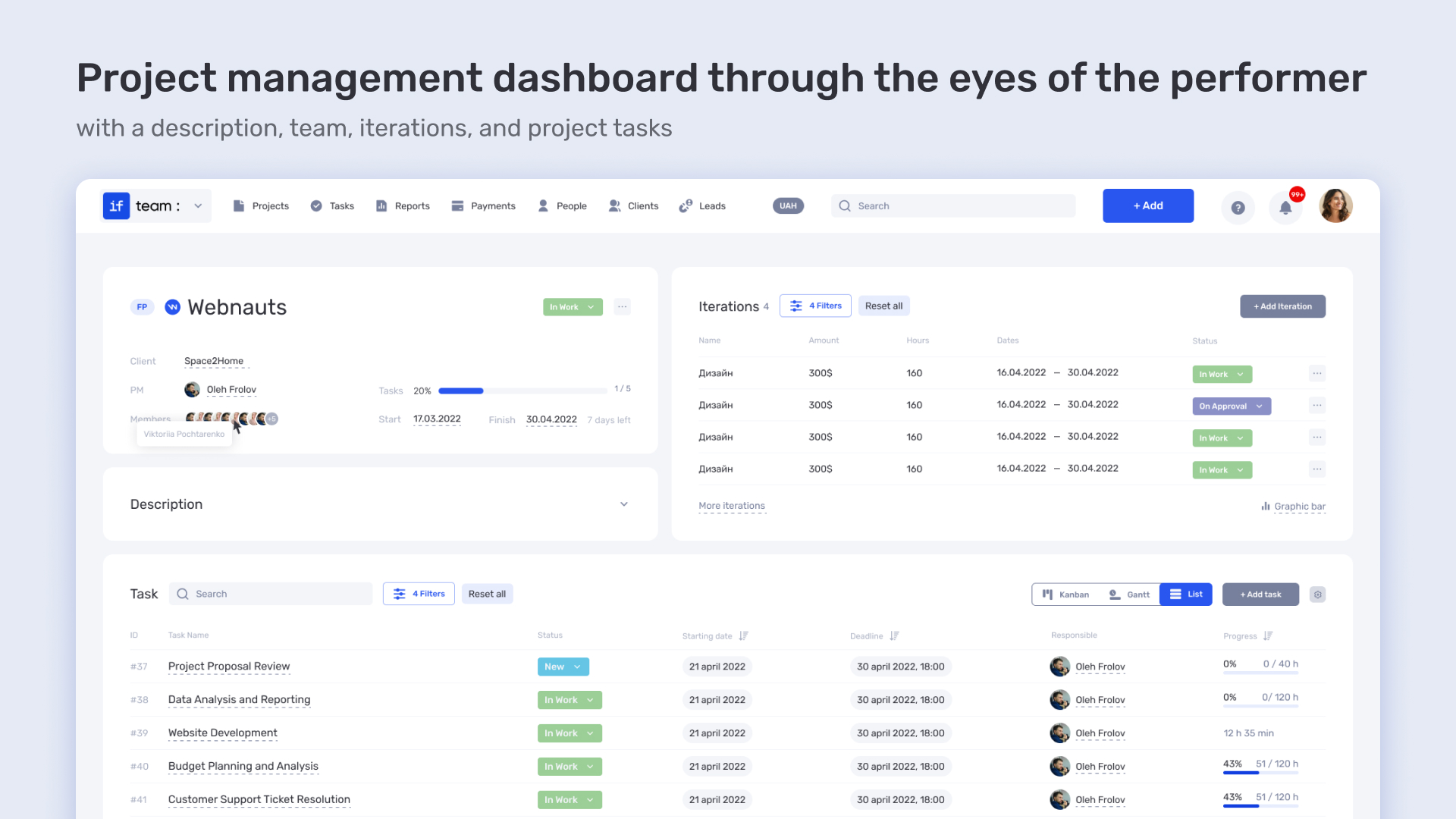
Instead of constantly searching for data and bringing new participants up to date each time, if.team offers to store all information on a simple dashboard. The dashboard puts all the key data in one place, so project performers can not only easily find and read the Description and Files, but also instantly jump to a specific iteration or task.
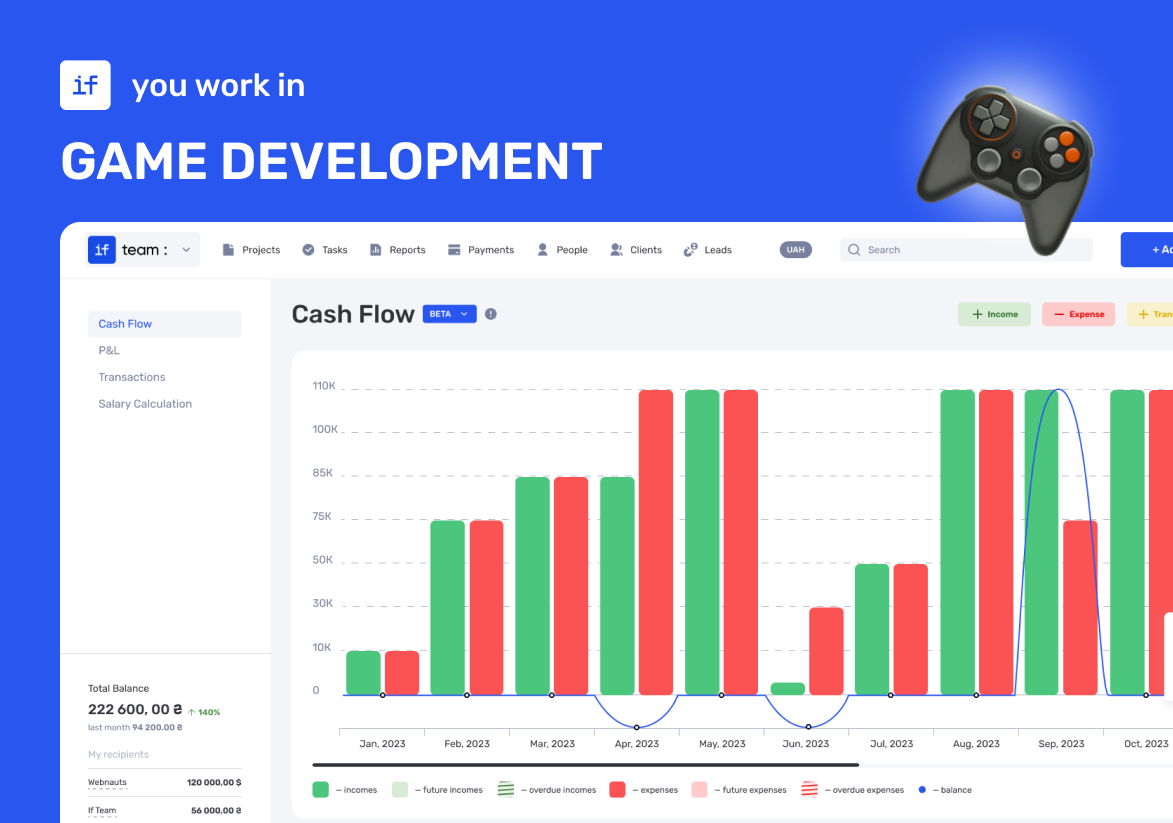
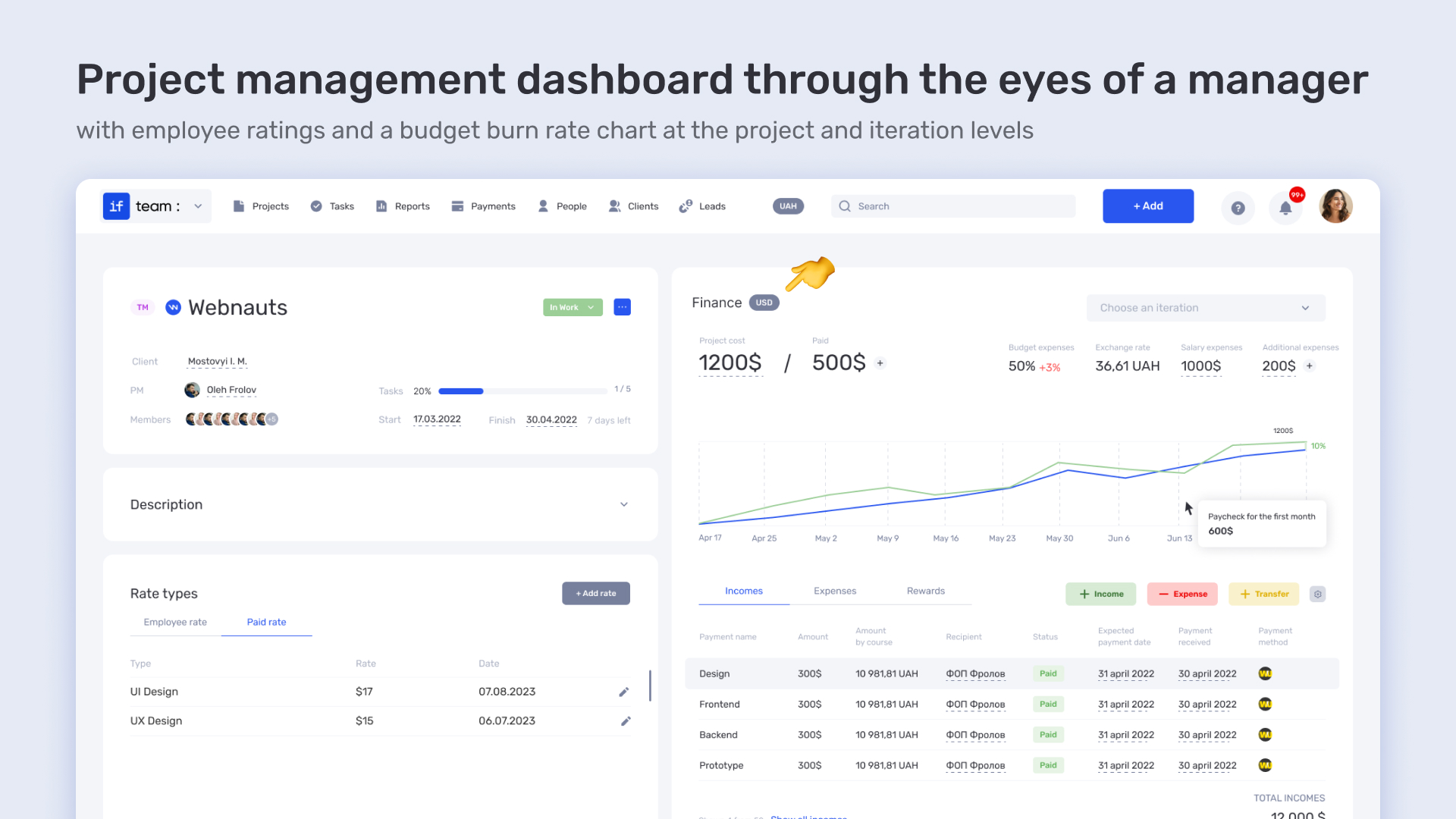
However, a project in the if.team system is not just a container for iterations and tasks. The project manager’s dashboard contains financial information with a budget burn rate graph, as well as data on the ratings of performers in different currencies. With all the data on one screen, you can accurately calculate costs, predict profitability, and track current project expenses in real time.
The value of the if.team service for Play Fusion Labs game creators
In addition to the ability to quickly add, assign and track tasks over time, Play Fusion Labs has found many useful features in the first 2 months of using if.team:
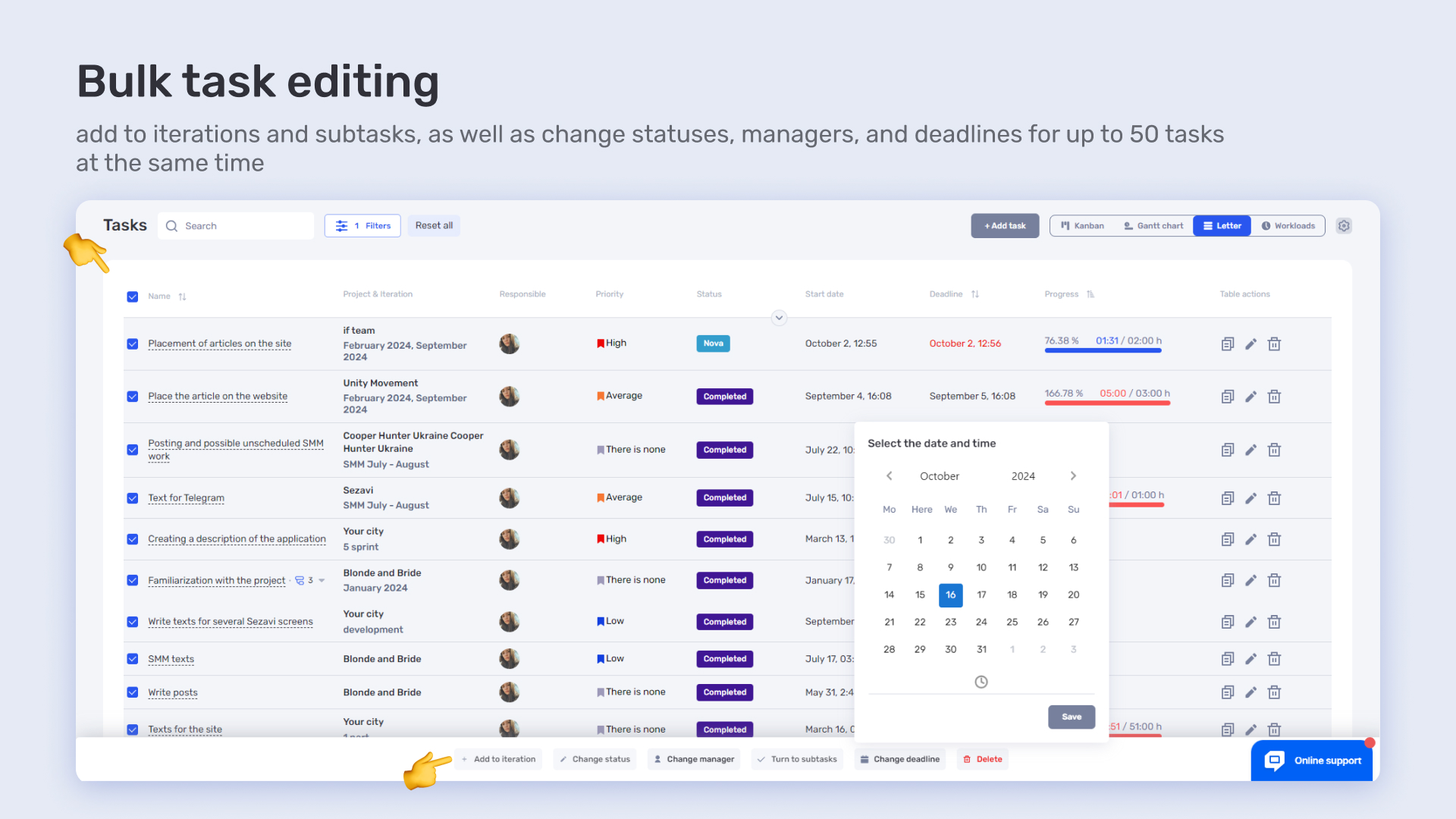
Bulk task editing
The ability to edit up to 50 tasks at once without having to go through each task individually.
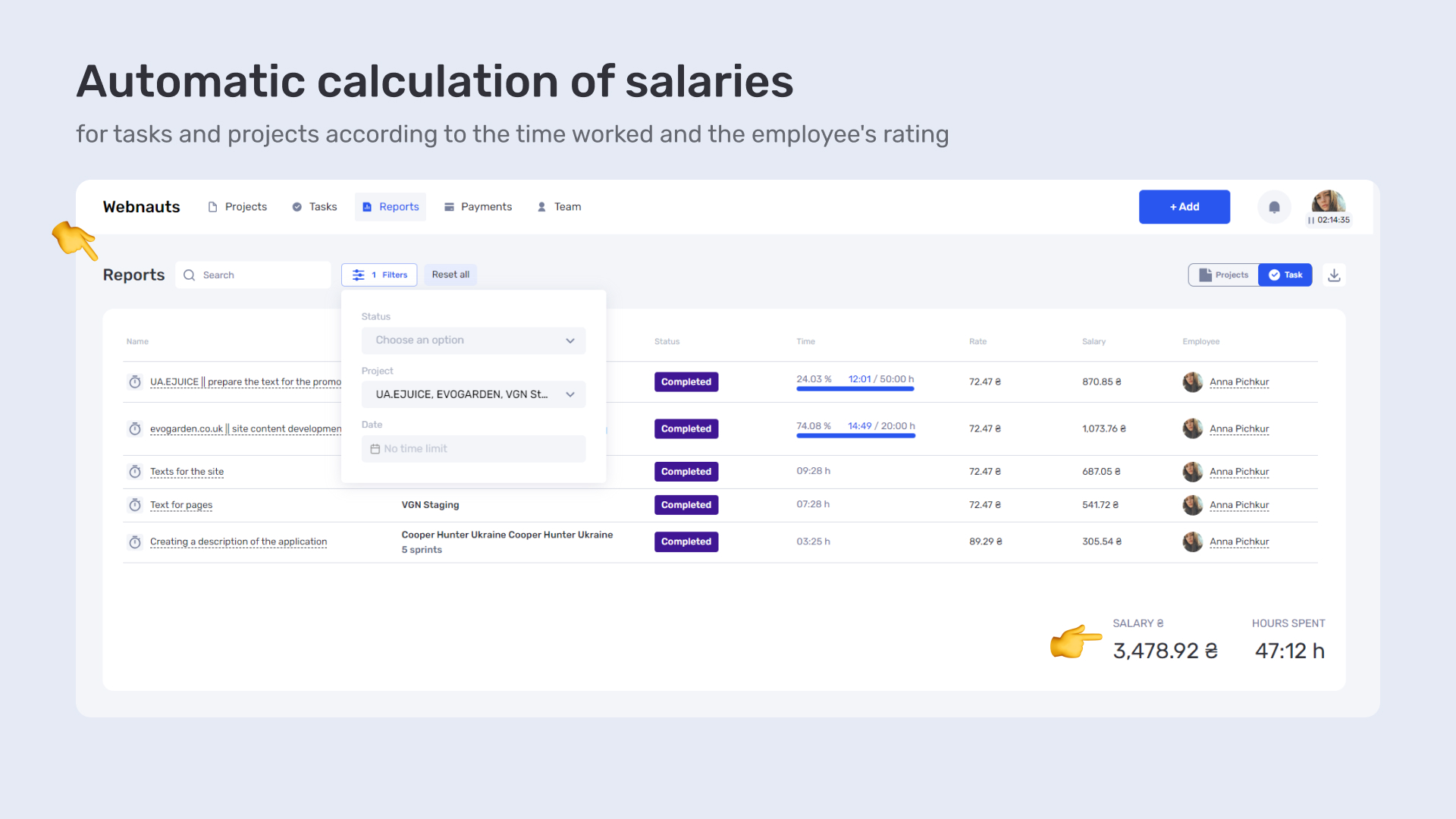
Time tracking of tasks with automatic salary calculation
Including hourly rates, is a convenient feature that makes it easier for Play Fusion Labs to pay freelancers.
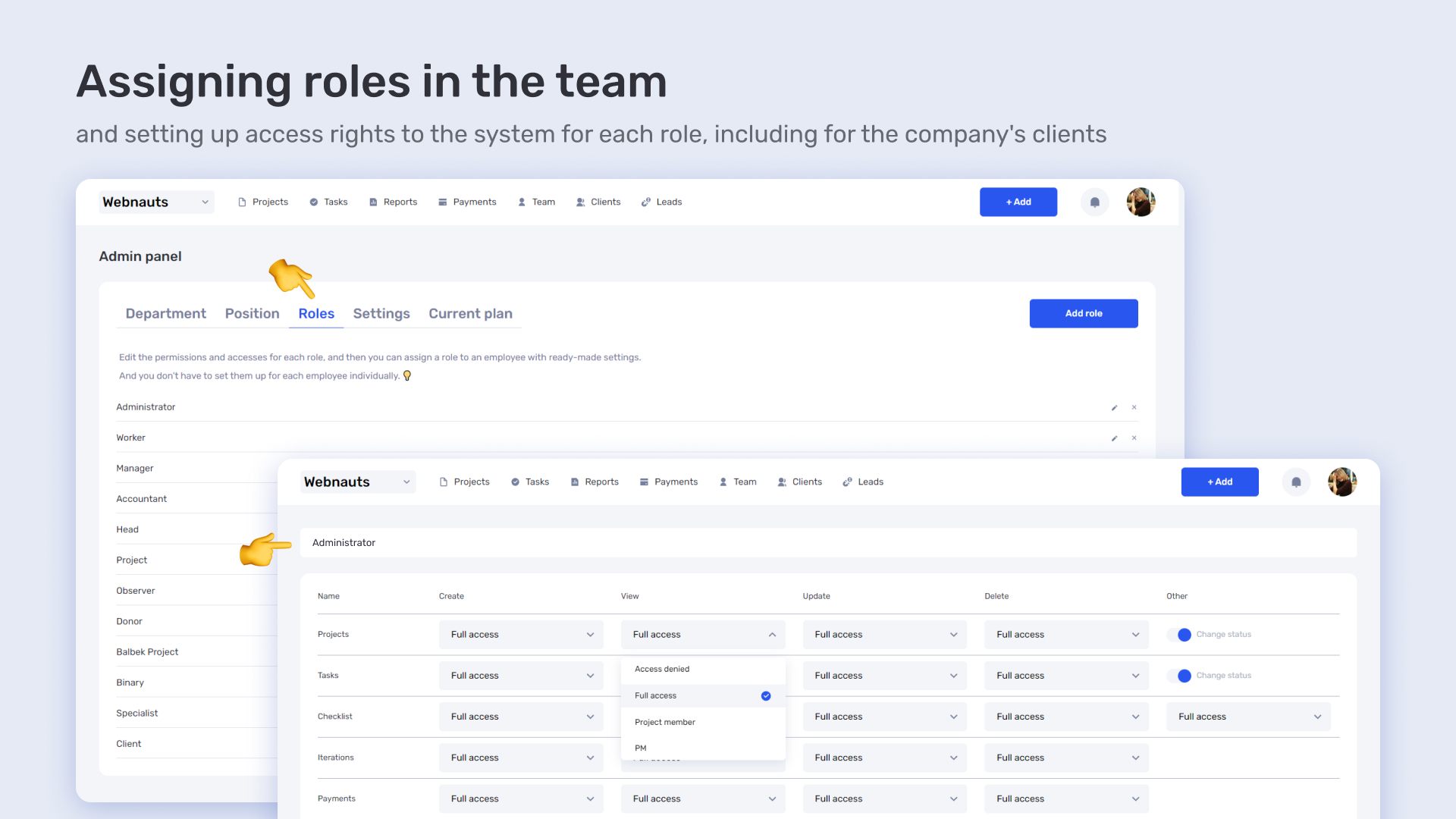
By the way, if.team allows you to involve not only external employees but also clients in projects so that they can monitor the progress of their assignments. All you have to do is give them access to the system in the if.team Settings.
Among the active users of this if.team feature are other creators of digital reality: artists and designers from the CGI studio GENENSE. The team deals with 3D rendering of architectural objects, where no iteration of the project is possible without the client’s approval.
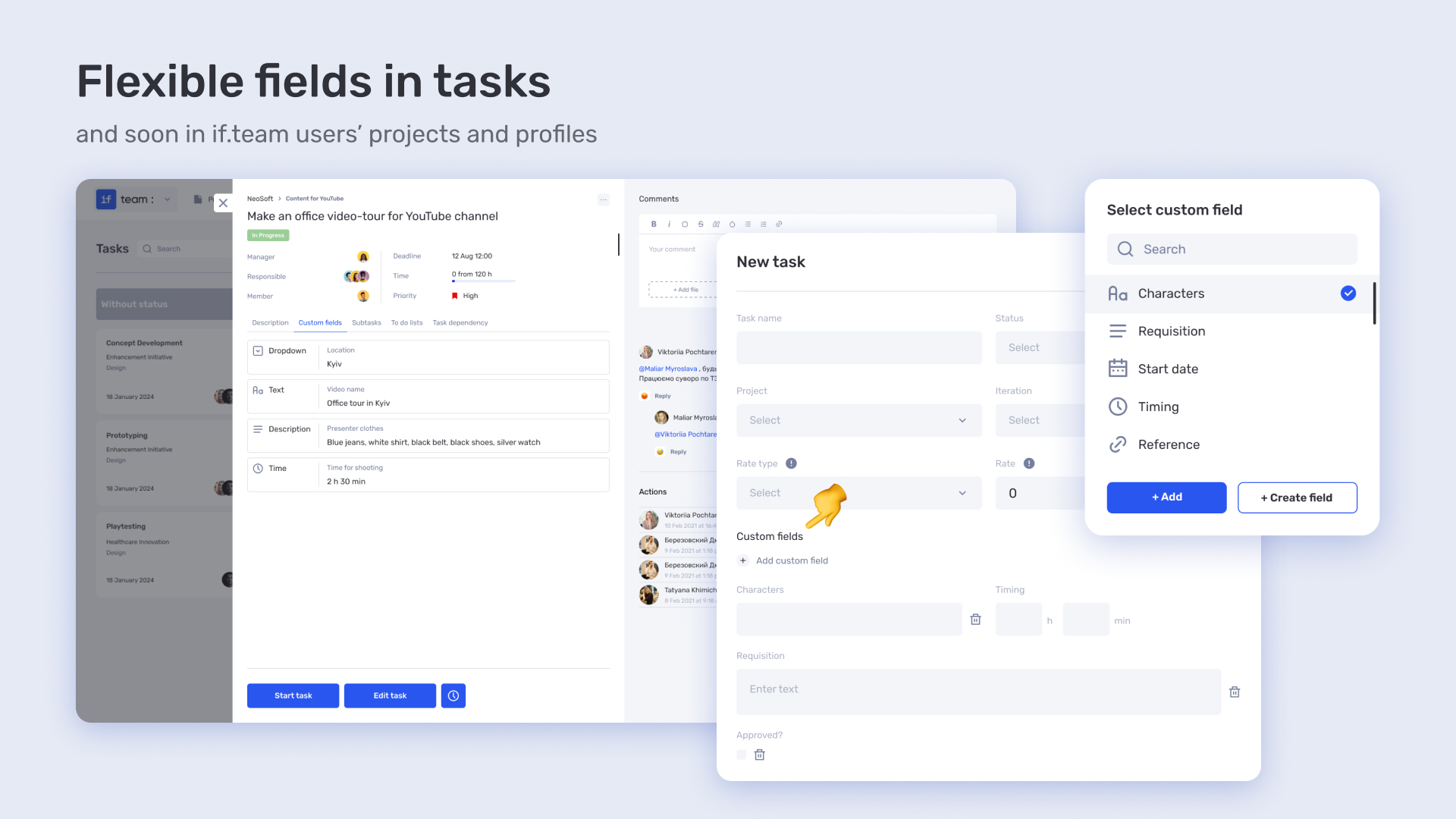
Custom fields in tasks
Which allows game development studios to easily customize the interface without involving the service’s technical team. By the way, this feature was developed at the request of the marketing agency Diez agency, whose project management experience we described in detail in our case study. Eventually, this feature came in handy for Play Fusion Labs and many other companies that chose if.team.
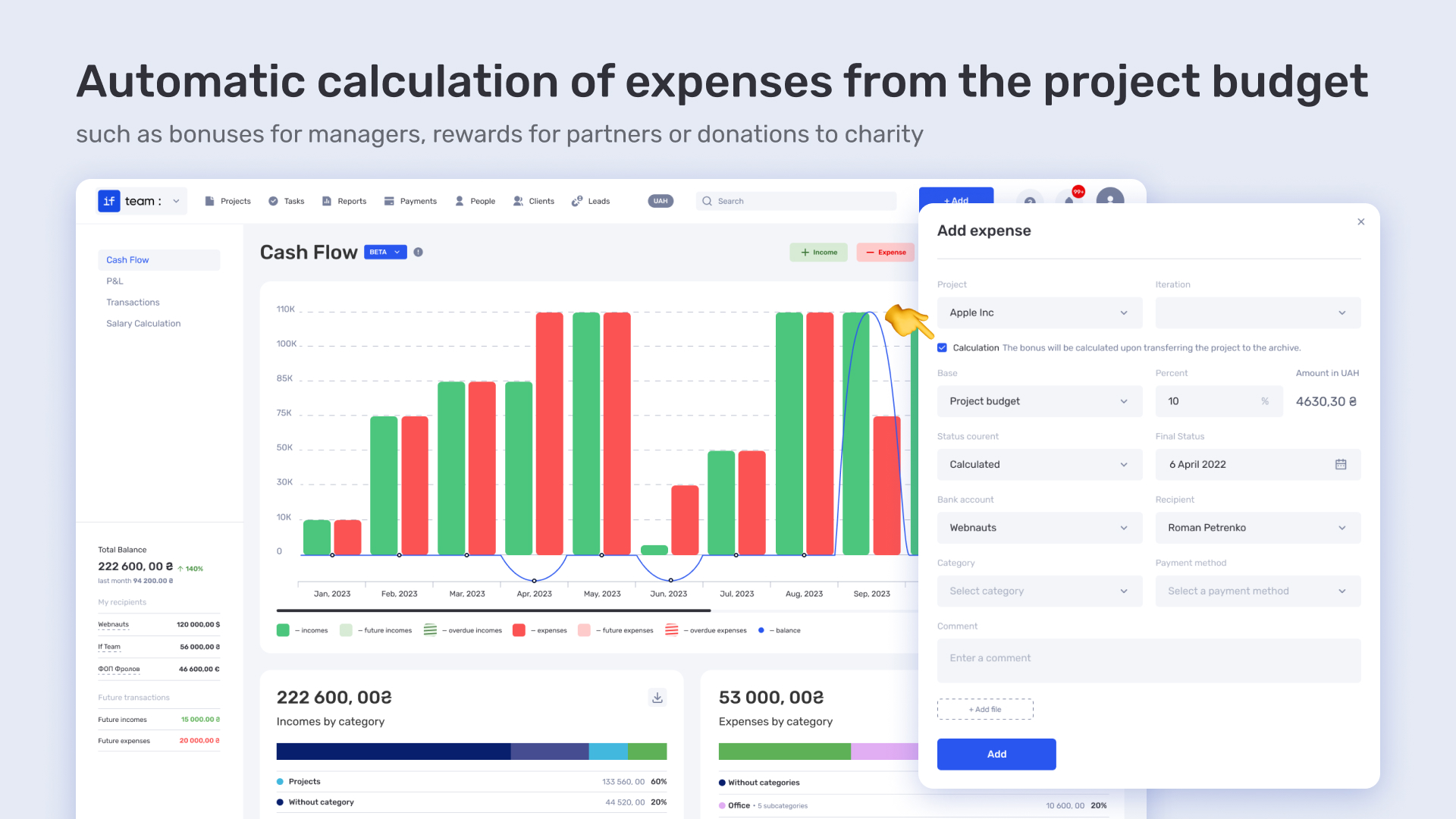
However, there is one feature that was suggested and implemented by the game development studio itself. This is an automatic calculation of a percentage of the project budget, e.g. bonuses for project managers, rewards for partners or charity expenses.
This leads to another key benefit of if.team for Play Fusion Labs. This is a high level of customer service – something the studio’s project management lacked in the days of Jira and Trello. Just as the creators of virtual worlds strive to create an unforgettable experience for gamers, if.team strives to create the most comfortable working environment for its clients. The technical support team is always open to dialogue with companies and is interested not only in resolving any system failures quickly, but also in developing new features and modules based on if.team that, given the customisation experience and project orientation of the product, will be useful to hundreds of other companies.
Working with a large number of parallel cases requires legal teams to plan precisely, control workload, and maintain transparent coordination between employees. A separate challenge is the need to...
In project work, the connection between processes is critical — how tasks are created, how work is executed, and how this is reflected in project economics, either in real time or...
As the number of players and operational complexity grew, the company needed to bring all processes into a single system in order to manage operations centrally and get real-time financial visibility...